Sketchbook Drawing Part II
As a follow-up to my last blog about cultivating a daily drawing practice, I’d like to share what I have learned from my process in hopes that it will inspire your own sketchbook work.
I have to admit that initially setting aside 15 mins. was a challenge. I didn’t know what to draw and which materials to focus on, but that uncertainty was the whole point, I reminded myself. Once I let go of the anticipatory thoughts, things began to flow and the joy of just being creative and expressing myself took over.
I began with a light sketch using a vine charcoal stick and then transitioned to watercolor crayons, allowing loose, random lines to emege into a landscape. I particularly noticed there was far less pressure than when working on a canvas—it felt easier to experiment using less material without the fear of “mistakes”. I then added water in places with a brush to blend sections of the drawing. Bore I knew it, I had completely lost track of time for over an hour, watching unexpected elements reveal themselves.
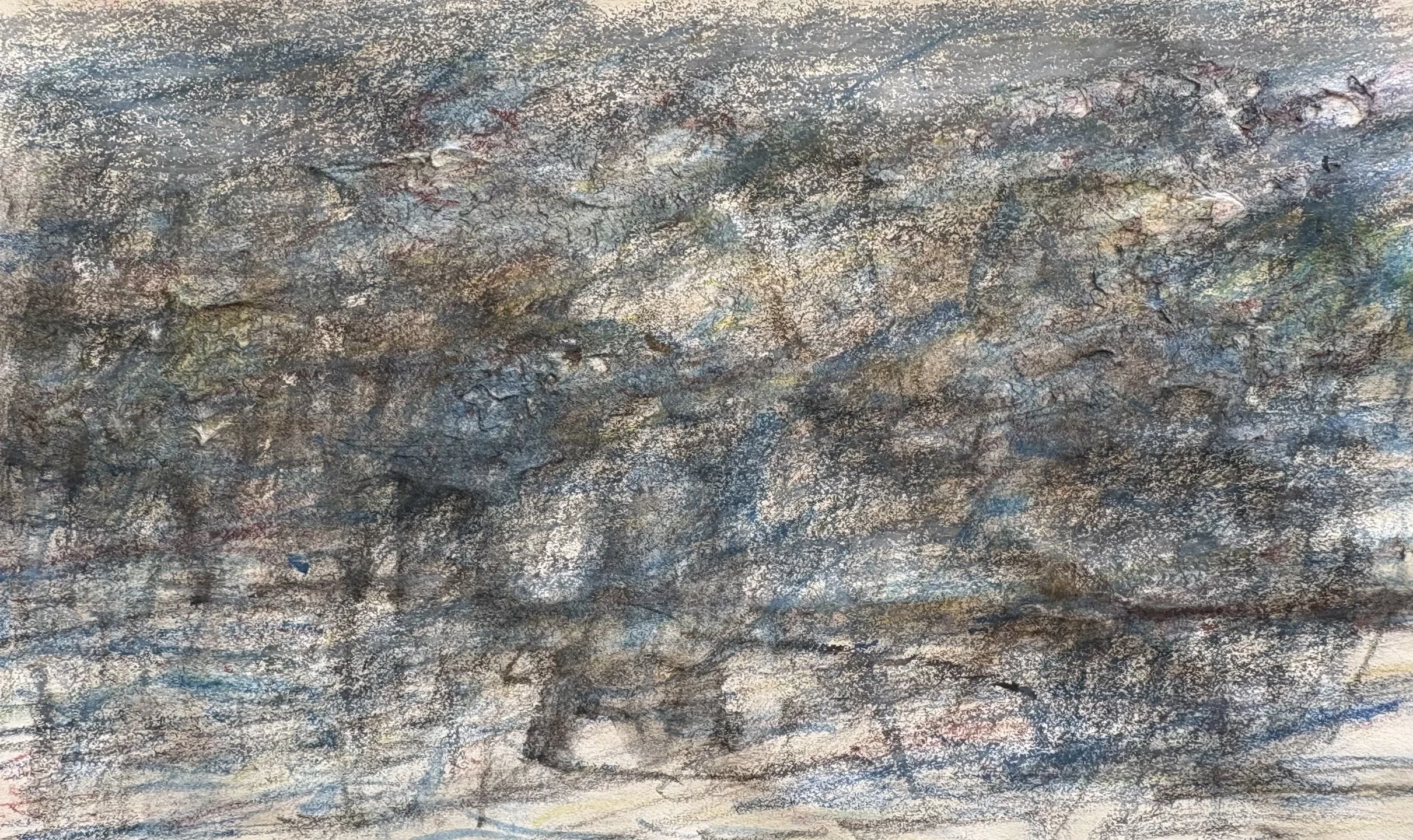
Untitled, Vine charcoal, watercolor crayons
Another valuable component of this exercise was my heightened awareness of composition. Working freely with the process allowed me to see how shapes and forms interacted like constructing a puzzle in a way I hadn’t experienced previously. It forced me to go further to keep the momentum going and explore another drawing that became these trees. By considering other versions of the original, I was witnessing “flow state” at its best. Repetition, I discovered, is one of the greatest benefits of developing ideas in a sketchbook.
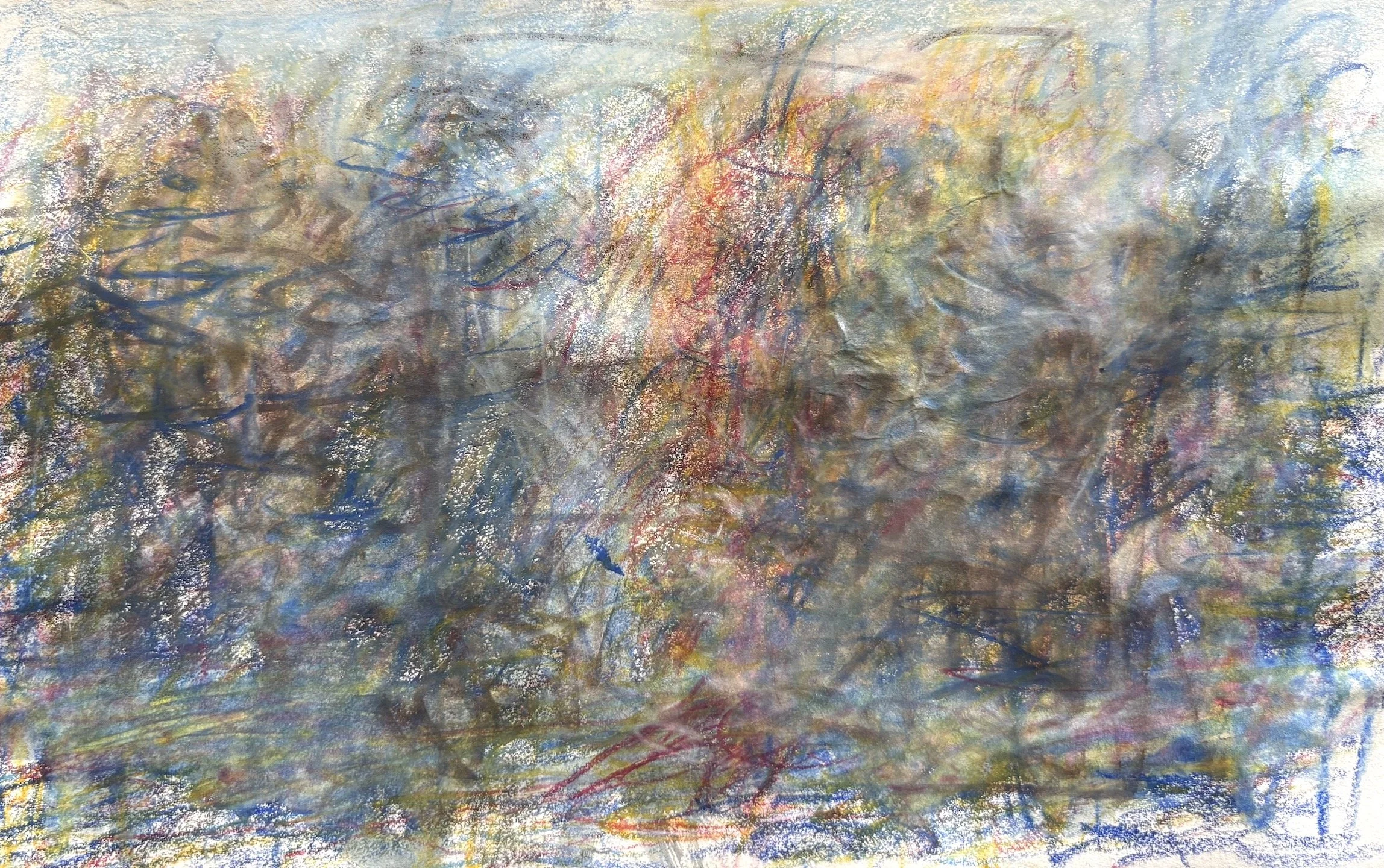
Trees, Watercolor crayons
Key Takeaways
Let go of expectations
Experiment with different materials, including various colors
Be open to new techniques
Use repetition to generate fresh compositions
Have fun
It’s important that I mention mindful drawing as well, the close observation of a given subject. Slowing down and and spending more time just seeing makes us more connected to our environment. Keeping a visual record of “observations” serves a similar function as a daily journal. This approach trains the eye to look carefully, taking notice of the subtle nuances that are easily overlooked in “autopilot”. I have an example here of a gourd drawing, a clear contrast to the expressive drawing. Both techniques complement one another and will have a great impact on your artwork.
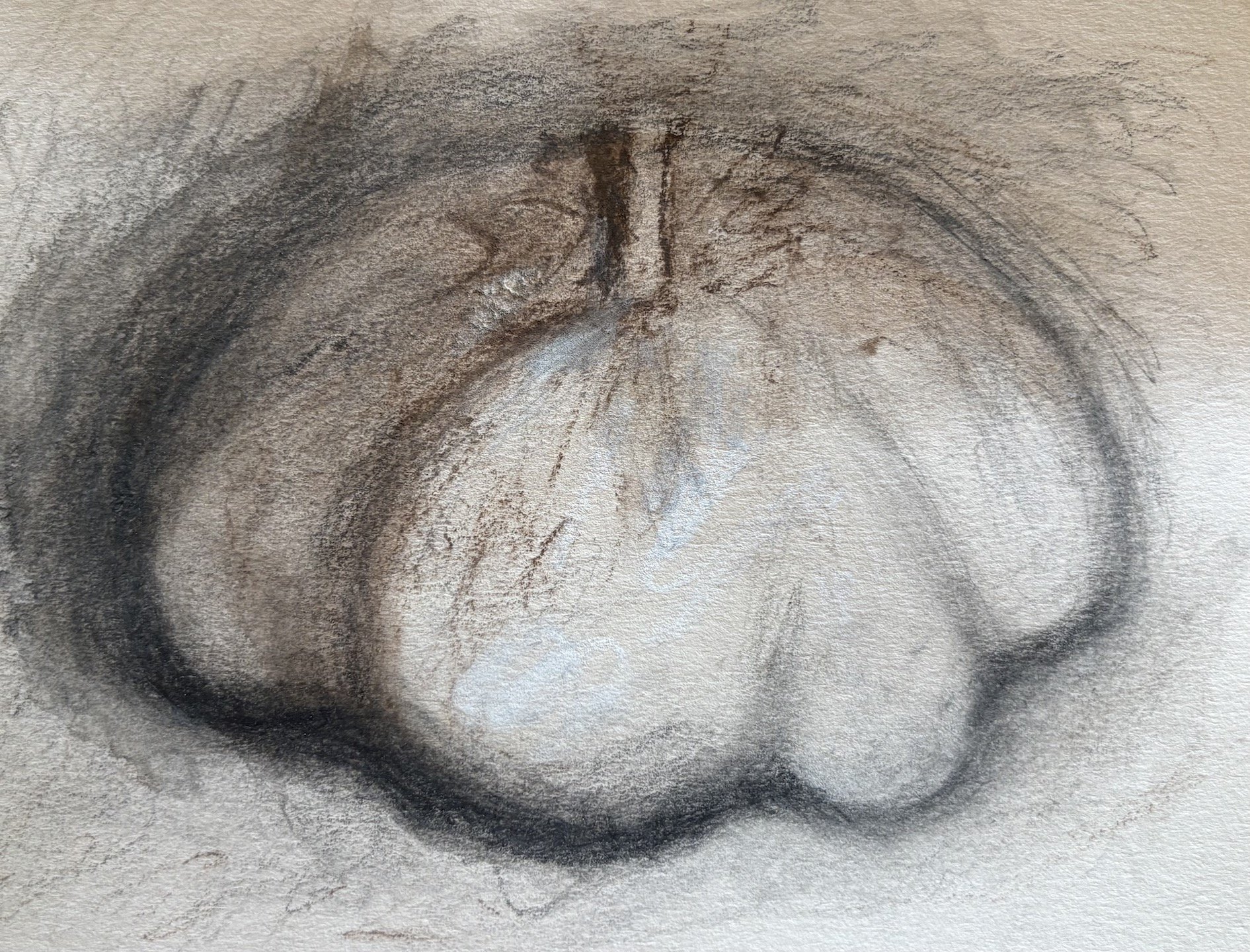
Gourd, Graphite and conte
Lastly, there’s no rule that this process must be restricted to drawing or painting. For example, collage making could apply as well. The act of cutting, ripping, and gluing various types of paper encourages you to think about shape and form, a new way of considering composition. Working on a board for larger pieces will provide more stability, particularly for building layers. Possible materials to explore are rag paper, embroidered paper, decorative papers, tissue, metallic sheets, newspaper, and any other textured surfaces that spark curiosity
It is my hope that you find inspiration from my creative experiences to start your own regular practice of sketchbook drawing or at least consider new ideas. Please send any samples as I’d like to include them in a future newsletter!
